The short answer: the Budget strengthens one upfront capital allowance from January 2027, reduces the main writing-down rate from April and keeps full expensing. It also changes some operating costs for manufacturers, hospitality businesses and vehicle operators. These measures may affect when and how a business invests, but they do not make equipment 50% cheaper, guarantee tax relief or change lender credit assessment.
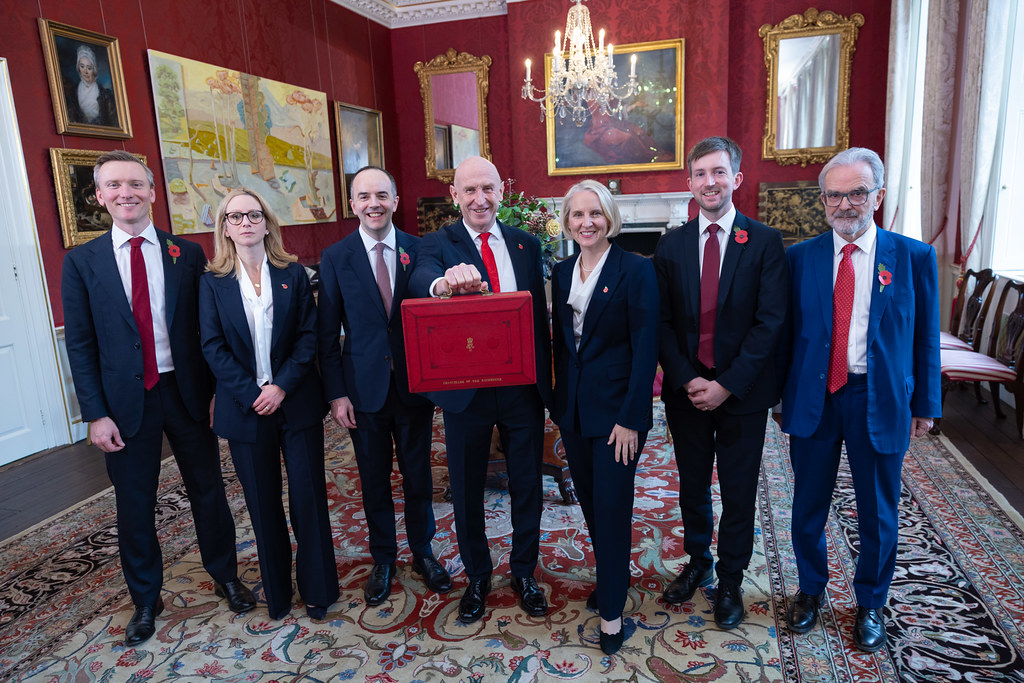
This guide uses the final HM Treasury Budget document and HMRC's Overview of Tax Legislation and Rates, both published on 28 October 2026. It concentrates on the measures most relevant to productive assets, hire purchase, equipment leasing and sector cash flow. It is general information, not accounting, tax, legal or financial advice.
The Budget changes at a glance
| Measure | Confirmed change | Practical relevance |
|---|---|---|
| Main-rate first-year allowance | Increases from 40% to 50% for qualifying expenditure from 1 January 2027 | Could accelerate tax relief on eligible new plant and machinery that is not already covered by another allowance. |
| Main-rate writing-down allowance | Falls from 14% to 12% from 1 April 2027 for Corporation Tax and 6 April 2027 for Income Tax | Relief on expenditure remaining in the main pool will be spread more slowly. |
| Full expensing | Maintained | Eligible companies can still consider a 100% first-year deduction for qualifying new and unused main-rate plant and machinery. |
| Manufacturing energy support | 20% to 25% electricity discount for around 10,000 eligible energy-intensive manufacturers from April 2027 | Lower operating costs could improve the case for automation, capacity or energy-efficient machinery for qualifying firms. |
| Hospitality business rates | Further targeted reductions and higher Small Business Rate Relief thresholds in England from April 2027 | Eligible venues may gain cash-flow headroom, but should test equipment affordability independently. |
| Fuel duty and HGV road tax | 5p fuel duty cut and qualifying HGV road tax holiday extended to 1 July 2027 | Provides short-term operating-cost support, not a reason on its own to replace or expand a fleet. |
The key distinction: a capital allowance changes when qualifying expenditure may be deducted from taxable profits. It is not a grant, rebate or percentage reduction in the supplier's price. The actual tax effect depends on eligibility, taxable profits and the business's circumstances.
What changed for capital allowances?
Capital allowances are a form of business tax relief for qualifying capital assets. Instead of treating the purchase of a long-term asset like an ordinary day-to-day expense, a business may deduct some or all of the qualifying expenditure from its taxable profits under the relevant allowance. Equipment, machinery, vans and lorries can fall within plant and machinery rules, but the business, asset, purchase method, use and timing all matter.
The allowance reduces the profit on which tax is calculated. It does not reduce the supplier's invoice, the amount financed or the repayments due to the lender. Different routes include the Annual Investment Allowance, first-year allowances, full expensing and writing-down allowances. If an asset could fit more than one route, the business and its accountant decide which available claim is appropriate.
The most relevant Budget announcement is a change to two rates. The main-rate first-year allowance introduced at 40% in January 2026 will rise to 50% for qualifying expenditure incurred on or after 1 January 2027. The main-rate writing-down allowance will then fall from 14% to 12% from 1 April 2027 for Corporation Tax and 6 April 2027 for Income Tax.
These measures pull in opposite directions. The 50% first-year allowance offers more relief upfront on eligible expenditure. The 12% writing-down allowance slows relief on qualifying balances left in the main pool. A business should therefore look at the complete tax treatment and not treat the larger headline percentage as the whole answer.
Full expensing remains available
The Budget says full expensing is maintained. Under current GOV.UK guidance, it allows companies to deduct 100% of qualifying new and unused main-rate plant and machinery expenditure from profits before tax in the year of purchase. It has detailed exclusions and is not available to every type of business or asset.
The Budget's 50% main-rate first-year allowance is also separate from the existing 50% first-year allowance for qualifying special-rate expenditure. Similar names do not mean identical eligibility. An accountant should establish which allowance, if any, fits the asset and transaction.
A worked hire purchase example
Illustrative deal: a UK limited company agrees to buy a new CNC lathe for £60,000 excluding VAT. It pays a £6,000 deposit and finances the remaining £54,000 plus interest over 48 months on hire purchase. The machine is delivered and put into business use immediately.
If the company's accountant confirms that the lathe and agreement qualify for full expensing, the company may be able to deduct the £60,000 capital cost from taxable profits for that accounting period. Using a simplified 25% Corporation Tax assumption, and assuming the full deduction relieves profits at that rate, this could reduce the tax calculation by £15,000.
The company still owes the £6,000 deposit, the £54,000 financed capital and all agreed interest and charges. The £15,000 is not a cash rebate and is not deducted from the lender's balance. GOV.UK says interest is excluded from the hire purchase capital allowance calculation. Actual tax relief can differ, and another allowance may be more appropriate.
What a 50% allowance does not mean
- It does not reduce the supplier invoice by 50%.
- It does not mean HMRC refunds half of the equipment cost.
- It does not automatically apply to used equipment, cars or every lease.
- It does not make an unaffordable purchase affordable.
- It does not replace the need to confirm tax eligibility and timing.
Does the finance structure change the tax position?
Potentially. Buying outright, using hire purchase and taking an equipment lease can produce different accounting, ownership and tax outcomes. GOV.UK's eligibility guidance specifically asks how the plant or machinery was obtained, including whether it was purchased outright or on hire purchase. That does not mean every hire purchase agreement qualifies.
The commercial comparison should come first: deposit, monthly payment, total amount payable, asset life, maintenance, VAT treatment and the intended end position. The tax treatment should then be confirmed for the chosen structure. A projected tax benefit should never be used as the only reason to sign an agreement.
Timing matters, but operational need still comes first: delaying an essential machine to reach a new allowance date could cost more in lost output, repairs or missed work than the timing benefit is worth. Compare the after-tax position with the commercial cost of waiting.
What the Budget means by sector
Manufacturing equipment
The Budget says the British Industrial Competitiveness Scheme will give around 10,000 eligible energy-intensive manufacturing firms a 20% to 25% electricity discount from April 2027, including a back payment for 2026-27. This could strengthen the business case for manufacturing equipment that expands output, removes a bottleneck or improves energy efficiency.
Eligibility for the energy scheme is separate from eligibility for capital allowances or finance. A manufacturer should model the project using its expected discount, production gain, maintenance cost, installation period and finance payment, rather than treating the energy saving as certain before approval.
Hospitality, commercial kitchens and coffee equipment
In England, the Budget funds an extra 20 percentage-point business-rate reduction for pubs, music venues and social clubs. It also raises Small Business Rate Relief thresholds for retail, hospitality and leisure properties from April 2027, while other properties in those sectors are due a two-year real-terms freeze.
For an eligible cafe, restaurant or venue, lower rates could create cash-flow room for a commercial kitchen, refrigeration or coffee machine. The investment still needs to work on realistic customer volumes, gross margin, energy, servicing and staffing assumptions. Business-rate support does not make every refurbishment or new site viable.
Commercial vehicles and HGVs
The 5p fuel duty cut and freeze, together with the qualifying HGV road tax holiday, are extended to 1 July 2027. Current DVLA guidance describes this as a temporary £1 vehicle tax rate for most eligible HGVs. The separate HGV levy continues to be charged where it applies. The policy gives operators some short-term cost visibility, but it does not settle whether a vehicle should be replaced, retained or changed to another powertrain.
Vehicle classification matters for tax. Vans and lorries can fall within plant and machinery allowances, subject to the usual eligibility rules. Cars are treated differently and are excluded from the Annual Investment Allowance, full expensing and the Budget's main-rate first-year allowance. Electric Vehicle Excise Duty begins in April 2028 for battery-electric and plug-in hybrid cars. Published government guidance says vans, buses, coaches and HGVs will be outside its scope when it launches.
| Vehicle type | Budget or tax point | Finance planning point |
|---|---|---|
| Van | May be treated as plant and machinery. eVED is outside the initial April 2028 scope. | Check whether the asset is new or used, its tax classification, mileage, payload, maintenance and expected replacement point. |
| HGV | Most qualifying HGVs receive temporary £1 vehicle tax to 1 July 2027. The HGV levy remains separate. | Model utilisation, fuel, tyres, servicing, annual tests, downtime and residual value alongside the finance term. |
| Business car | Cars follow separate capital allowance rules. Battery-electric and plug-in hybrid cars enter eVED from April 2028. | Include benefit-in-kind, vehicle tax, eVED, mileage, charging or fuel and the intended replacement cycle. |
A commercial vehicle finance example
Consider a haulage business buying a used Euro VI truck for £90,000 on hire purchase. If the truck and tax date meet the DVLA rules, the operator may benefit from the temporary £1 HGV vehicle tax. It should not assume the HGV levy disappears, and a used truck will not qualify for full expensing or the new 50% main-rate first-year allowance. Its accountant may instead consider another available allowance, such as the Annual Investment Allowance or writing-down allowances, subject to eligibility.
The commercial vehicle finance decision should then compare the deposit, capital and interest, expected miles, fuel use, tyres, servicing, insurance, annual tests, likely downtime and resale value. A short-term road tax saving is useful, but it is small beside the whole-life cost of a working truck.
Lease-and-leaseback arrangements
The Budget includes a technical anti-avoidance change that expands the statutory definition of a finance lease when it is applied to specific lease-and-leaseback arrangements. It takes effect from 28 October 2026. This is not a general rewrite of every equipment lease, but it matters for businesses using more complex sale, lease or leaseback structures. Specialist tax and legal advice is appropriate before relying on a particular treatment.
What the Budget did not change
| Unchanged factor | What businesses still need to show |
|---|---|
| Credit assessment | Affordability, trading history, credit profile and a credible repayment case. |
| Asset assessment | A clear supplier quote, suitable asset, realistic working life and acceptable value. |
| Finance terms | A deposit, term and monthly commitment that leave cash-flow headroom. |
| Tax eligibility | Confirmation that the business, expenditure, asset and transaction meet the relevant rules. |
| Commercial return | A reason to invest based on capacity, productivity, replacement need or revenue, not tax alone. |
A seven-step equipment investment check
- Start with the operational case. Define the capacity, productivity, replacement or revenue result the asset must deliver.
- Confirm the complete cost. Include the asset, delivery, installation, training, servicing, energy and downtime.
- Check the timing. Compare the commercial cost of waiting with any potential tax-timing advantage.
- Ask an accountant about eligibility. Confirm the business, asset, expenditure date and finance structure before relying on an allowance.
- Compare finance by outcome. Review deposit, term, total amount payable, VAT, ownership and end-of-term position.
- Stress-test affordability. Leave room for weaker sales, higher costs or slower customer payments.
- Prepare the application. Have the supplier quote, asset details, accounts, management information and bank statements ready.
Capra's view: the Budget is a useful prompt to review 2027 investment plans, not a reason to rush a transaction. The strongest purchase will still be one that the business needs, can afford and can explain clearly, with any tax benefit checked independently.
Methodology and sources
We reviewed the final HM Treasury Budget 2026 document and HMRC's accompanying tax legislation overview published on 28 October 2026. We then checked current GOV.UK guidance on capital allowances, hire purchase claims, manufacturing energy support, temporary HGV vehicle tax and Electric Vehicle Excise Duty. Policy detail can change as legislation and scheme guidance develop, so this page will be reviewed when material updates are published.
- HM Treasury: Budget 2026
- HMRC: Budget 2026 Overview of Tax Legislation and Rates
- HMRC: Budget 2026 tax-related documents
- GOV.UK: Capital allowances overview
- GOV.UK: What plant and machinery allowances can cover
- GOV.UK: How to claim capital allowances, including hire purchase
- GOV.UK: Full expensing and 50% first-year allowance
- HMRC: Check eligibility for full expensing and first-year allowances
- GOV.UK: British Industrial Competitiveness Scheme guidance
- DVLA: Temporary £1 vehicle tax for most HGVs
- HMRC: Electric Vehicle Excise Duty
Frequently asked questions
What changed for equipment investment in Autumn Budget 2026?
The Budget will raise the main-rate first-year allowance from 40% to 50% for qualifying expenditure incurred from 1 January 2027. It will also reduce the main-rate writing-down allowance from 14% to 12% from April 2027. Full expensing remains in place.
Does a 50% first-year allowance mean equipment costs 50% less?
No. It is not a grant or a 50% discount. A capital allowance can reduce taxable profits by an eligible amount, subject to the business, asset, timing and applicable tax rules. The cash tax effect is different from the allowance percentage.
Did Autumn Budget 2026 remove full expensing?
No. The government confirmed that full expensing is maintained. Companies can continue to consider it for qualifying new and unused main-rate plant and machinery, subject to the detailed eligibility rules.
Can financed equipment qualify for capital allowances?
It can in some circumstances. GOV.UK says a qualifying hire purchase user can claim on the capital payments when the asset starts being used, including capital payments still due, but not on interest. The result depends on the agreement, asset, business and timing, so confirm it with an accountant.
Should a business delay an equipment purchase until January 2027?
Not on the Budget headline alone. The correct timing depends on when the asset is needed, which allowance is actually available, the business's accounting period, supplier lead times, cash flow and the commercial cost of waiting.
What does the Budget mean for manufacturing equipment investment?
Eligible energy-intensive manufacturers could benefit from the British Industrial Competitiveness Scheme, which is intended to provide a 20% to 25% electricity discount from April 2027. Capital allowance changes may also affect the timing of qualifying machinery investment.
What does the Budget mean for hospitality and catering businesses?
Business-rate support may improve cash flow for some eligible retail, hospitality and leisure properties in England. That can help investment capacity, but it does not make commercial kitchen or coffee equipment automatically affordable or tax-relievable.
What does the Budget mean for commercial vehicles and HGVs?
The 5p fuel duty cut and qualifying HGV road tax holiday are extended to 1 July 2027, although the HGV levy continues separately. Electric Vehicle Excise Duty starts in April 2028 for electric and plug-in hybrid cars, with vans and HGVs outside its initial scope.
Does the lease-and-leaseback change affect ordinary equipment finance?
The announced change is a targeted anti-avoidance measure that expands the statutory finance lease definition for specific lease-and-leaseback arrangements. It is not a general rewrite of every equipment lease. Businesses using a sale, lease or leaseback structure should take specialist advice.
Did the Budget make equipment finance easier to obtain?
No. The Budget changes tax and operating-cost considerations, not lender underwriting. Approval still depends on the applicant, affordability, credit profile, asset, supplier, deposit, term and the lender's criteria.