The short answer: the Bank of England has increased Bank Rate by 0.25 percentage points to 4%. Existing fixed-payment finance agreements should ordinarily continue under their agreed terms. New finance quotations may reflect changing funding costs, but Bank Rate is only one part of equipment finance pricing.
At its meeting ending on 4 November 2026, the Bank of England's Monetary Policy Committee voted by eight members to one to raise Bank Rate from 3.75% to 4%. One member preferred a larger increase to 4.25%.
The Bank pointed to higher global energy prices, stronger-than-expected activity and the risk that higher costs could feed into wider prices and wages. It expects CPI inflation to rise to around 5% by the middle of 2027 before falling again. The Bank also stressed that monetary policy is not on a predetermined path.
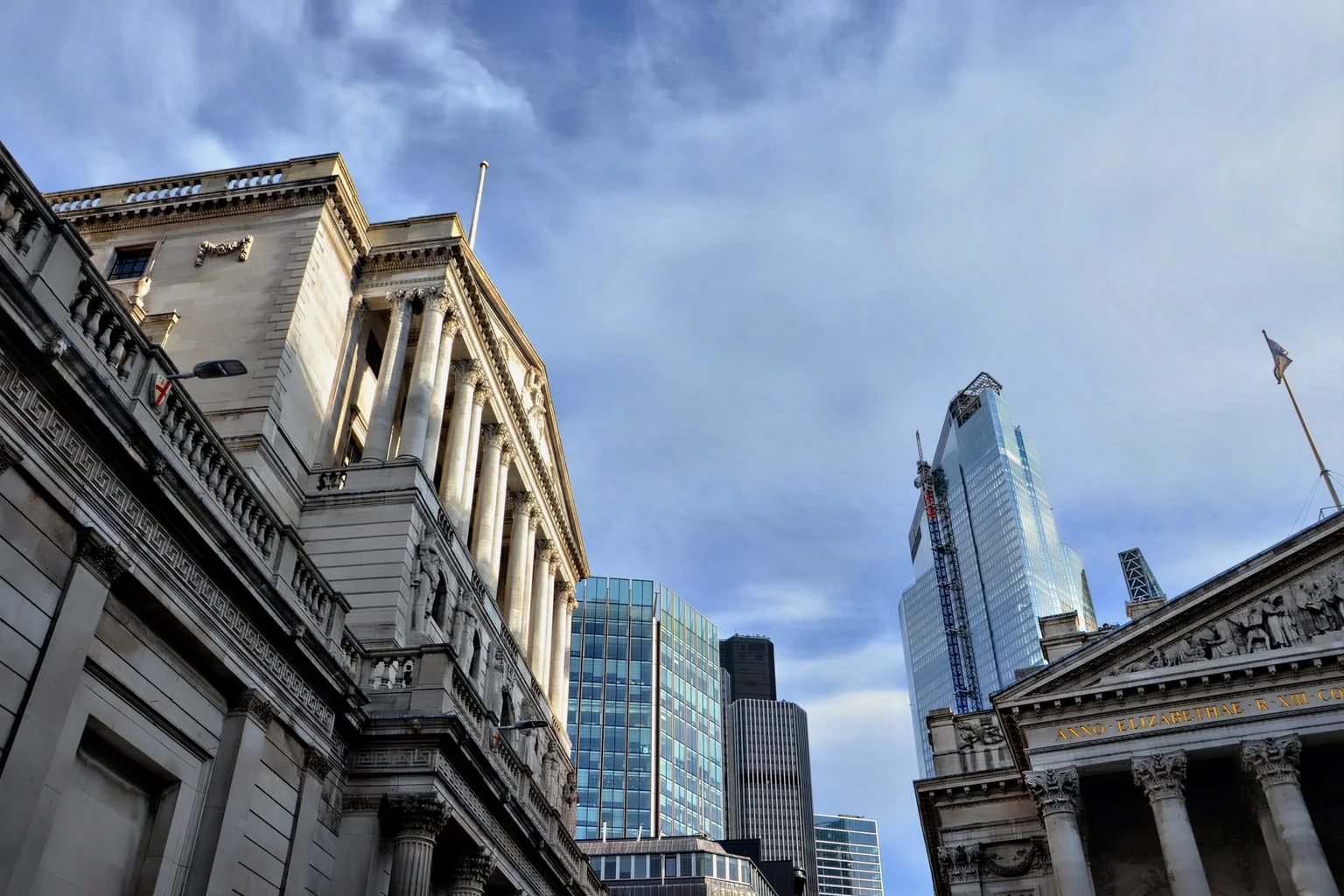
What is Bank Rate?
Bank Rate is the interest rate the Bank of England pays to commercial banks that hold money with it. It influences borrowing and saving rates across the economy and is one of the tools used to bring inflation back towards the government's 2% target.
Bank Rate is not the same as the finance rate offered to an individual business. A lender will also consider the applicant's credit profile, trading history, affordability, the equipment being financed, the deposit, the term and its own funding costs and credit criteria.
The important distinction: a 0.25 percentage-point increase in Bank Rate does not automatically produce an identical increase in every equipment finance quotation.
How could the interest rate rise affect equipment finance?
Some lenders may review pricing for new applications as funding conditions change. The effect will vary between providers, products and applicants. A strong application for a suitable business asset may be priced differently from a weaker application for an asset with limited resale value.
Many equipment finance agreements use fixed monthly payments. Once the agreement begins, those payments would normally remain fixed for the agreed term, subject to the contract. Businesses with variable-rate borrowing should check their individual agreement.
What does the rise mean for hire purchase?
Hire purchase allows a business to acquire equipment through regular payments, with ownership normally passing after the final payment and any applicable purchase fee. Pricing on new agreements may respond to lender funding costs, but the business, asset, deposit and term still influence the quotation.
A larger deposit can reduce the amount financed and may reduce the total interest paid, but it also uses more working capital. A longer term can reduce the regular payment, although it may increase the total amount payable. The right structure should fit the equipment's useful working life and leave the business with sufficient cash-flow headroom.
What does the rise mean for equipment leasing?
Equipment leasing can allow a business to use equipment without paying the full purchase price upfront. Existing fixed rentals should not ordinarily change solely because Bank Rate has increased, although businesses should check the terms of their own agreement.
New lease pricing may reflect current market conditions. Leasing can still be relevant where a business wants to preserve cash, match payments to the equipment's useful life or replace equipment regularly.
Should a business delay buying equipment?
A higher Bank Rate does not automatically make delaying investment the correct decision. The commercial return from the equipment matters more than the headline rate alone.
Waiting could make sense when the equipment is optional, cash flow is under pressure or the expected return remains uncertain. Delaying essential equipment could also create a greater cost through repairs, lost productivity, missed contracts or insufficient capacity.
A £50,000 equipment example
A catering company is considering a £50,000 commercial kitchen installation. The decision should not rest solely on whether Bank Rate is 3.75% or 4%.
The company should compare the deposit, monthly payment and total amount payable with the additional customers it can serve, energy savings from replacing old equipment, reduced maintenance and the date the new kitchen can begin generating revenue.
If the expected return comfortably exceeds the finance cost, proceeding may still make commercial sense. If the return is marginal, the business could change the specification, increase the deposit or postpone the project.
How can a business manage higher finance costs?
- Compare the complete structure. Review the deposit, regular payment, total amount payable, ownership position and end-of-term terms.
- Match the term to the asset. The agreement should reflect how long the equipment is expected to remain productive.
- Protect working capital. A larger deposit may reduce borrowing, but it should not leave the business short of cash for wages, stock or unexpected costs.
- Prepare a complete application. Accurate accounts, bank statements, supplier quotations and a clear explanation of the investment can help a lender assess the case efficiently.
- Consider suitable used equipment. Used assets can reduce the amount financed, subject to age, condition, supplier, warranty and lender requirements.
- Review assets already owned. Asset refinance may release capital from eligible equipment or vehicles, although the cost and security position need careful consideration.
Questions to ask before accepting a quotation
| Question | Why it matters |
|---|---|
| Are the payments fixed? | Fixed payments provide certainty. Variable payments can move under the agreement's terms. |
| What is the total amount payable? | The monthly figure alone does not show the complete finance cost. |
| What deposit is required? | The deposit affects both the borrowing amount and cash retained in the business. |
| Who owns the equipment? | Ownership during and after the term varies by finance product. |
| Can the agreement be settled early? | Settlement terms matter if the business sells or replaces the asset sooner than planned. |
| How is VAT treated? | VAT timing differs between products and can affect short-term cash flow. |
What happens next?
The next Monetary Policy Committee announcement is scheduled for 17 December 2026. Some committee members indicated that further tightening could be required, but the Bank has not committed to another rise. Future decisions will depend on inflation, energy prices, wages, pricing behaviour and economic activity.
Businesses should avoid making an equipment decision based on an assumption that rates will definitely rise or fall. A more reliable test is whether the investment works using the finance terms available today, with enough headroom for operating costs and weaker-than-expected trading.
Sources and methodology
This article uses the Bank of England's Monetary Policy Summary and minutes published on 5 November 2026 and the Office for National Statistics' September 2026 inflation release. It explains the decision in the context of business equipment finance. It does not predict future lender pricing or future Bank Rate decisions.
- Bank of England: November 2026 Monetary Policy Summary and minutes
- Bank of England: current Bank Rate and latest decision
- Office for National Statistics: Consumer price inflation, September 2026
Frequently asked questions
What is the current Bank of England interest rate?
Bank Rate is 4% following the decision published on 5 November 2026.
How much did the Bank of England raise interest rates by?
Bank Rate increased by 0.25 percentage points, from 3.75% to 4%.
Why did the Bank of England raise interest rates?
The Bank cited higher energy prices, stronger-than-expected economic activity and a greater risk of inflation becoming persistent. CPI inflation reached 3.5% in September 2026.
Will equipment finance become more expensive?
Some new quotations may change if lenders adjust their pricing. The result will vary because equipment finance costs also depend on the applicant, asset, deposit, term and lender.
Will my existing equipment finance payment increase?
An existing fixed-payment agreement should ordinarily continue under its agreed terms. Variable-rate agreements can work differently, so check the agreement if unsure.
Is Bank Rate the same as my business finance rate?
No. Bank Rate influences wider borrowing conditions, but a business finance quotation also reflects credit risk, the asset, the term and lender pricing.
Is now a bad time to finance equipment?
Not necessarily. The central question is whether the equipment's expected commercial benefit justifies its complete cost and whether the payments remain affordable.
Can I reduce the monthly cost of equipment finance?
Changing the deposit, term, asset cost or finance product may alter the monthly payment. Each change can affect the total amount payable and should be assessed carefully.
Are hire purchase payments normally fixed?
Many business hire purchase agreements use fixed payments, but this should be confirmed in the quotation and agreement before proceeding.
When is the next Bank of England interest rate decision?
The next Monetary Policy Committee announcement is scheduled for 17 December 2026.